
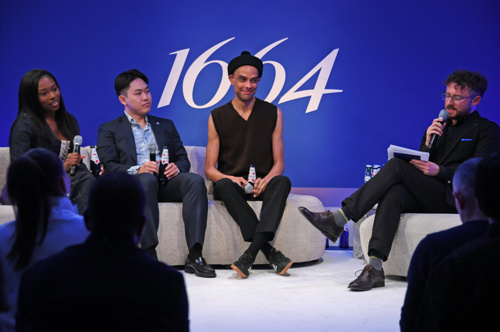
On an evening in London, 1664 brought together creators, tastemakers and cultural voices for the launch of Unquestionably Good Taste - a global campaign designed to challenge how we define taste, expression and individuality today with its accompanying short film starring global ambassador Robert Pattinson.

At a time when algorithms increasingly shape what we see, like and consume, the campaign asks a simple but powerful question: what does good taste really mean, and who gets to decide?
A Cultural Conversation, Not a Campaign
Rather than presenting a fixed definition, 1664’s platform ‘A Question of Good Taste’ is built on tension. It explores the idea that taste is deeply personal, yet constantly influenced by culture, technology and social expectations.
At the heart of the campaign is a growing contradiction: we celebrate individuality, but often hesitate to express it. We value honesty, yet frequently self-censor. And while we are more connected than ever, our opinions can feel more exposed and more scrutinised than ever before.
This is where 1664 steps in. Not to dictate taste, but to champion the freedom to have one.
Robert Pattinson: A Face of Unconventional Taste
Leading the campaign is global ambassador Robert Pattinson, an actor known not just for his global recognition, but for his instinct to choose the unexpected.
From independent films to bold creative decisions, Pattinson represents a kind of taste that resists conformity. His involvement signals a shift away from traditional celebrity endorsement, and towards something more cultural: a shared exploration of what it means to have, and trust, your own point of view.
On the night, his presence anchored the conversation, bringing his personal perspective to the campaign’s themes of judgment, individuality and creative instinct.
The White Paper: The State of Taste Today
Alongside the launch, 1664 unveiled a global white paper (encompassing Asia, North America, East and West Europe) exploring how people think about taste, authentic self-expression and social behaviour today.
The findings reveal a world full of contradictions:
- While the majority believe society would benefit from greater honesty, many admit to regularly holding back their true opinions
- A significant number say it is easier to conform than stand out
- And yet, most people still believe they personally have “good taste” with 83% of people believing they have it while only 31% agree on what “good taste” is.
The white paper highlights a defining tension of our time: the desire to express ourselves, balanced against the fear of how that expression will be received.
Rather than offering answers, the white paper opens up a conversation; one that invites people to reflect on their own behaviour, biases and beliefs.
16.64 Seconds: A Moment of Expression
Laddering into the full experience was 16.64 Seconds — a format inspired by the idea that it takes just a few seconds to make a judgement, form an opinion or decide what we like.
Guests were invited to step into a dedicated space and respond to a series of prompts from light-hearted questions about everyday preferences to more thought-provoking reflections on identity, honesty and self-expression.
The rule was simple: say what you think, in just 16.64 seconds.
The result was a series of unfiltered, human responses. Mostly playful, and often revealing. In a world where people often pause, edit or reconsider before speaking, the format encouraged instinct over self censorship.
From London to the World
While the London event marked the beginning, A Question of Good Taste is designed to evolve globally.
Creators across different countries will continue the conversation, responding to the same central themes through their own cultural lens.
From social content to local activations, the campaign will expand into a platform where perspectives can differ and where debate is not only accepted, but encouraged.
Agree to Disagree
At its core, A Question of Good Taste is about creating space for conversation.
In a time where opinions can feel risky, and differences can feel divisive, 1664 is championing a simple idea: that it’s possible to express yourself, hear others, and still respect the space in between.
Because good taste isn’t about being right.
It’s about having the confidence to have an opinion and the openness to let others have theirs.